Subscribe now & get exclusive bike deals,
new arrivals alerts and pro riding tips!
Cycle green, stay fit, live better.

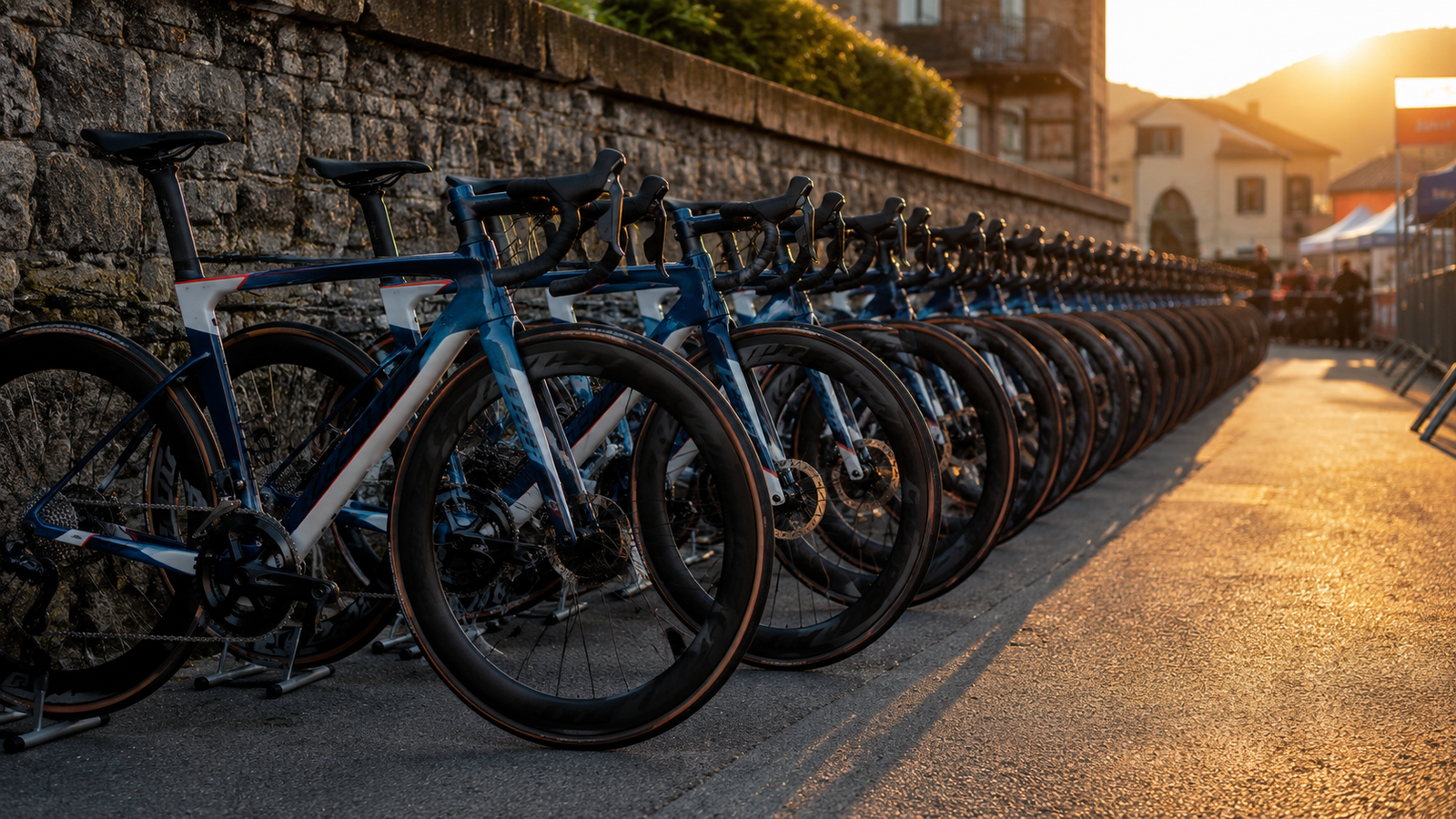
A B2B guide for cycling teams comparing carbon road bike sourcing, supplier checks, samples, quality control and order confirmation.
Cycling teams procuring carbon road bikes in batches of 8–30 units typically negotiate 15–25% below standard wholesale pricing through direct factory relationships, with custom team paint included at no additional cost above MOQ 15. Team programs require coordinated sizing across riders (typical run: 2 XS, 4 S, 6 M, 6 L, 3 XL, 1 XXL for a 22-rider team), unified groupset spec, and matching team livery applied through factory paint. Lead time is typically 60–90 days from order confirmation to delivery. UCI compliance is required for sanctioned racing teams. Sponsor partnerships, where a manufacturer provides bikes in exchange for brand visibility, are negotiable for teams with proven race calendars and audience reach.
This guide addresses four distinct team procurement scenarios, each with different priorities:
Amateur racing teams and clubs typically procure 10–25 bikes for competitive members, balancing performance and budget. The team usually pays directly, sometimes with sponsor offset.
University and collegiate cycling teams often procure 15–40 bikes, with funding from team budget, athletic department, or sponsor support. Budget sensitivity is high; uniform appearance matters for team identity.
Corporate cycling teams procure for employee racing programs, often as wellness or branding initiatives. Budget is less constrained; brand alignment and presentation matter more.
Sponsor-equipped teams receive bikes from a manufacturer or distributor in exchange for brand visibility on team kit, race results, and social media. This is a partnership rather than a purchase.
The procurement approach differs across these scenarios, but the manufacturing logistics are largely shared.
Teams traditionally bought from local bike shops or distributors, marking up bikes 30–40% above wholesale. Direct factory procurement bypasses this layer and unlocks meaningful budget for either better spec or larger fleets.
A typical USD 4,500 retail carbon road bike has a wholesale cost around USD 1,800–2,200. A team buying 20 bikes directly from a factory at USD 1,950 each commits USD 39,000 versus USD 90,000 retail — freeing roughly USD 50,000 for additional bikes, premium spec upgrades, training camps, or race travel.
The trade-offs are real: direct procurement requires more administrative work (international payments, customs handling, shipping logistics), longer lead times (60–90 days versus 1–2 weeks from a domestic dealer), and the team takes on warranty coordination directly with the factory. For teams with the capacity to manage these, the savings justify the effort.
For teams without that capacity, working with a dealer who specializes in team programs (and who buys directly from a factory at wholesale) is a middle path: 10–15% above factory direct cost, with the dealer handling logistics and service.
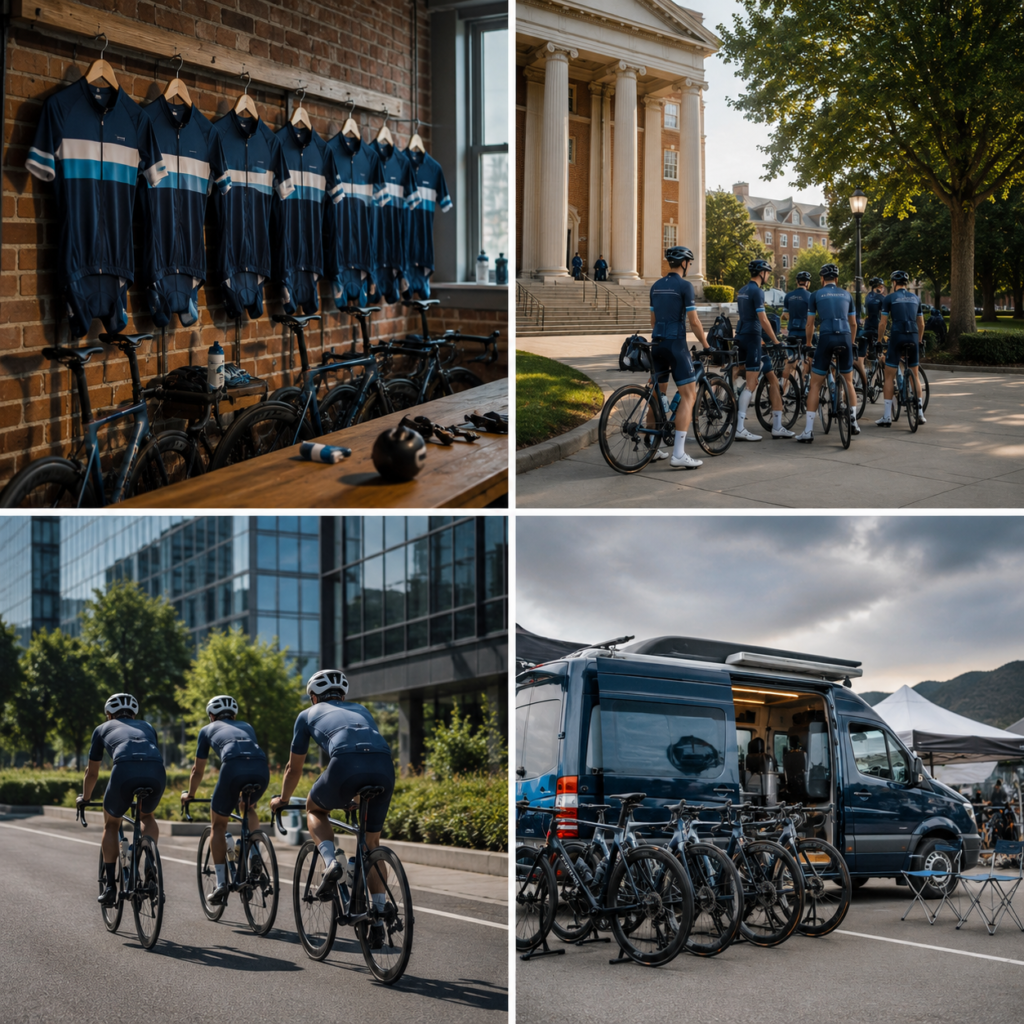
Team bikes are not just retail bikes in matching paint. Several spec considerations are specific to team use.
Groupset standardization across the entire team simplifies maintenance, shared spare parts, and team mechanic support. The most common 2026 team specs are Shimano Ultegra Di2 R8170 (mid-tier teams), Shimano 105 Di2 R7170 (budget-conscious teams), and SRAM Force AXS (technical preference teams). Mixing groupsets across riders creates support headaches and is rarely worth the small cost savings.
Wheelset choice balances performance and durability. Race day wheels (50–60mm carbon) are typically a separate purchase or sponsor product. Training wheels included with the team bike should be durable mid-depth alloy or entry carbon (35–45mm) suitable for daily training rides.
Tire spec for team bikes typically prioritizes 28mm tubeless-ready tires, balancing rolling resistance, comfort, and durability. Pure race tires are often supplied separately for events.
Fit-related components (stem length, handlebar width, saddle) often require per-rider customization. Factories can ship bikes with a default cockpit (110mm stem, 42cm bar, neutral saddle) and the team replaces fit-critical components per rider. Some factories accept per-bike fit specs at MOQ 20+ at modest additional cost (USD 30–50 per bike).
Frame material grade matters more for teams than retail. High-modulus carbon (Toray T1000 or equivalent) saves 100–150g per frame versus standard modulus, which compounds across stage races. For elite amateur teams, the upgrade is typically worth USD 200–400 per frame.
Coordinating sizes for 15–30 riders is one of the more complex parts of team procurement. Two approaches work:
Pre-collected sizing data. Each rider provides height, inseam, and existing bike fit measurements. The team coordinator maps riders to frame sizes using the manufacturer’s geometry chart. This requires 4–6 weeks of lead time before placing the factory order to allow data collection and verification.
Standard size run. For larger teams without time for individual fitting, a statistically reasonable size distribution covers most rider populations:
| Frame Size | % of Team | Example: 22 riders |
|---|---|---|
| XS (49–50cm equivalent) | 5–8% | 1–2 |
| S (52cm equivalent) | 18–22% | 4–5 |
| M (54cm equivalent) | 28–32% | 6–7 |
| L (56cm equivalent) | 28–32% | 6–7 |
| XL (58cm equivalent) | 12–15% | 3 |
| XXL (60cm+ equivalent) | 3–5% | 1 |
This distribution suits adult amateur teams. University teams often skew slightly toward smaller sizes (lower average rider age and stature). Women’s teams require a different distribution with more XS and S inventory.
For teams with 8 or fewer riders, individual sizing is mandatory. Standard size runs do not work at small scale.
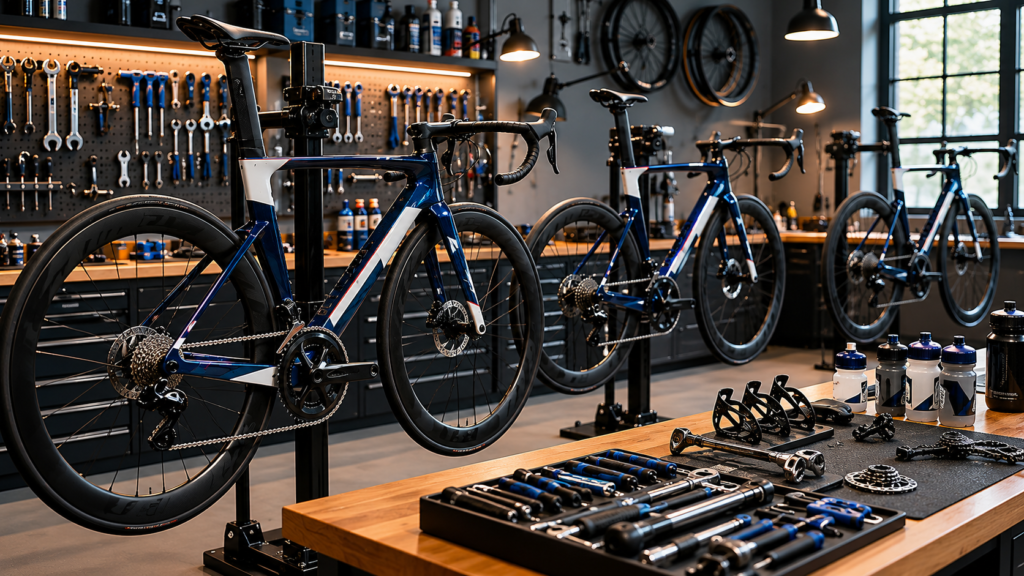
This is one of the most visible benefits of team procurement and one of the most underestimated logistical efforts.
Standard team paint at MOQ 15+ typically includes a custom paint scheme with team colors, sponsor logos, and rider names (optional). Factories generally include team paint at no additional cost above this MOQ, though premium finishes (chrome accents, color-shift effects, complex multi-mask designs) add USD 40–100 per frame.
Design file requirements for paint work:
A factory paint design team can produce digital mockups before production. Always approve mockups for every size before mass production begins. Logo placement that looks correct on a size M frame may need adjustment on size XS or XXL due to different tube proportions.
Sponsor logo coordination is the team coordinator’s responsibility, not the factory’s. Collect approved logo files from each sponsor with explicit usage permission for the bike application. Sponsors sometimes require specific logo positioning, color treatment, or proximity rules to other sponsors. Resolve these before factory submission.
Production timeline impact: custom team paint typically adds 7–14 days to production lead time versus stock paint. Plan accordingly.
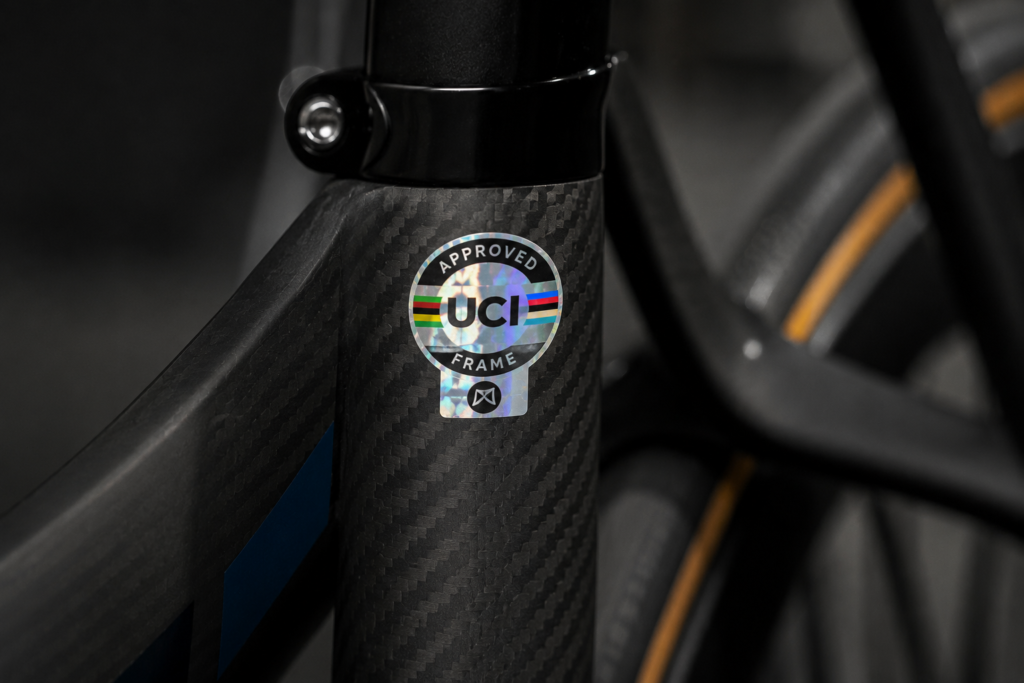
For teams competing in UCI-sanctioned events, frame compliance is mandatory and verified at registration.
The UCI maintains an approved frame list. Frames must be submitted for approval by the manufacturer, not the team. Approval involves geometric verification (no proprietary aero shapes outside the 3:1 tube ratio rule, minimum frame weight, dropout and bottom bracket dimensions) and a fee paid by the manufacturer.
For teams competing in UCI events, confirm with the factory that the specific frame model has UCI approval. The approval certificate has an identification number that must match the frame’s printed sticker. Frames sold for non-sanctioned use may not carry UCI approval even if the factory produces UCI-approved versions of similar models.
For amateur racing under USA Cycling, BC, FFC, or equivalent national federations, UCI approval is generally not required for non-elite categories. Confirm specific federation rules before assuming non-compliance is acceptable.
Frame weight is regulated: minimum 6.8kg total bike weight for UCI competition. Modern carbon frames easily exceed this, but extreme lightweight builds (sub-7.0kg) require ballast in some configurations. Most teams build at 7.2–7.8kg, comfortably above the minimum.
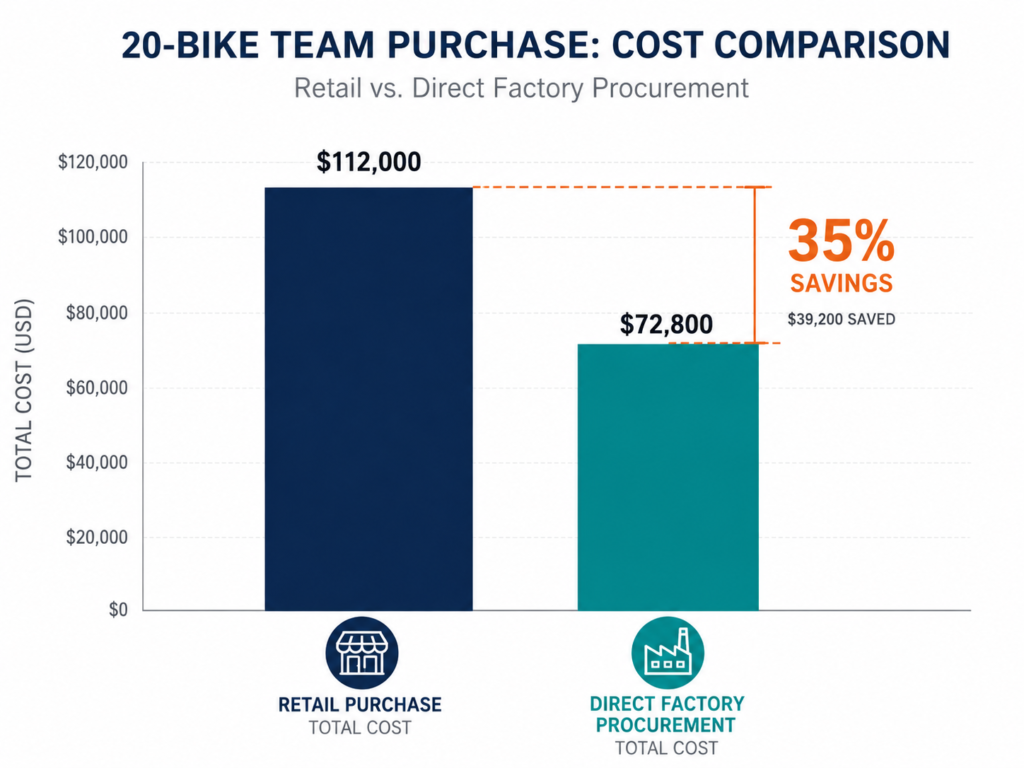
Team pricing typically follows a tiered structure based on order volume:
| Order Volume | Discount vs Standard Wholesale |
|---|---|
| 8–14 bikes | 0–5% |
| 15–24 bikes | 8–15% |
| 25–49 bikes | 15–20% |
| 50+ bikes | 20–25% |
| 100+ bikes (multi-team programs) | 25–30% |
For a representative spec — Shimano Ultegra Di2, alloy wheels, custom paint, complete bike — wholesale ranges USD 1,750–2,100 in 2026. A 22-bike team order typically lands at USD 1,550–1,800 per bike landed cost (FOB factory + freight + duties, before any local distribution).
Add USD 200–400 per bike for upgraded carbon wheelsets. Add USD 80–150 per bike for premium paint finishes. Add USD 30–80 per bike for individual rider fit specs.
Payment terms for team programs typically follow standard wholesale terms: 30% deposit on order confirmation, 70% balance against bill of lading before shipment. Some factories accept letters of credit for larger team orders (50+ bikes) or for institutional buyers (universities, federations).
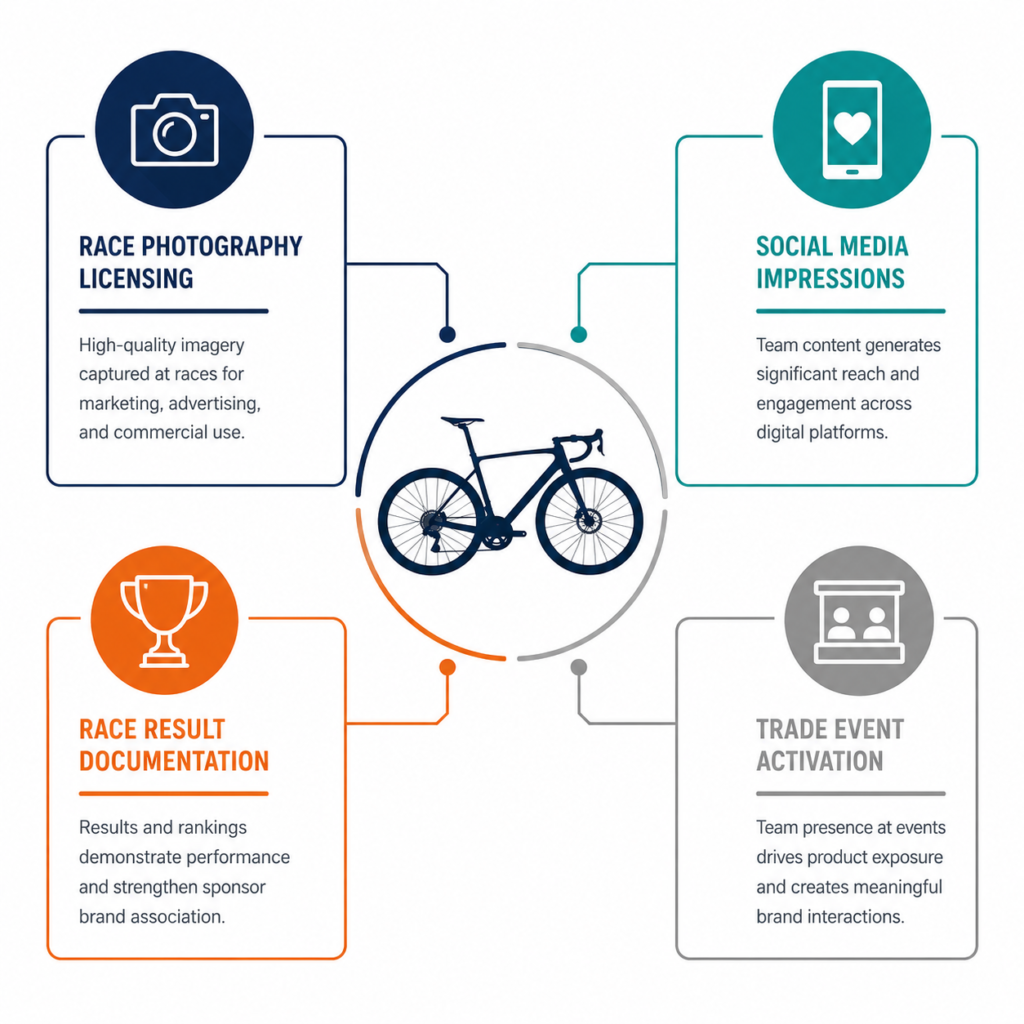
Some teams qualify for sponsor partnerships where bikes are provided at cost or below in exchange for brand visibility. The economics work for manufacturers when the team delivers measurable marketing return.
Qualifying criteria typically include:
Typical sponsor structures:
What manufacturers actually want from sponsor relationships:
Approach sponsor conversations with a media kit covering team history, race calendar, audience metrics, and clear deliverables. Vague “we’ll promote your brand” pitches rarely succeed. Specific commitments (“we will produce 12 race-day Instagram posts per season featuring the bike, plus 4 long-form blog posts on team mechanics maintaining the equipment, plus race photo licensing for unlimited marketing use”) get traction.
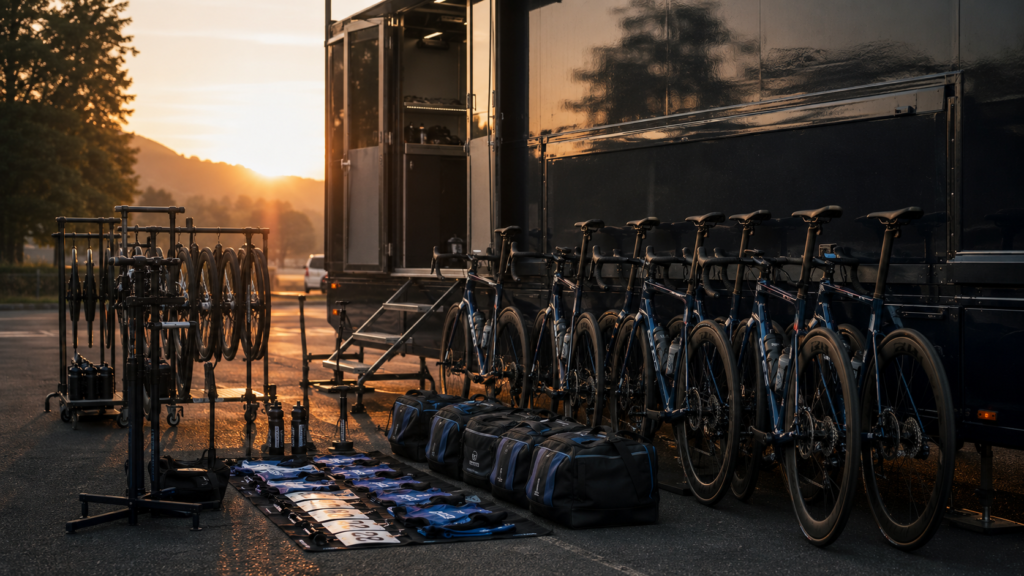
Team bikes endure significantly more wear than retail bikes. A team bike in heavy use covers 8,000–15,000 km annually versus 3,000–6,000 km for typical retail use.
Spare parts to order with the initial fleet:
| Spare | Quantity per 20 bikes |
|---|---|
| Replacement derailleur hangers | 8–10 |
| Bottom bracket bearings | 6–8 sets |
| Headset bearings | 4–6 sets |
| Spare paint (touch-up bottles) | 2 per color |
| Internal cable routing kits | 4–6 |
Frame warranty for team use typically follows standard terms (2 years), but team use sometimes voids certain claims (crash damage is not warranty-covered; this is universal). Confirm warranty terms in writing for team-specific usage patterns.
Mechanic support resources: request the factory’s frame service manual covering torque specs, internal cable routing, headset bearing replacement, and any frame-specific maintenance procedures. A reputable factory provides this on request.
A realistic timeline from team decision to first ride:
| Phase | Duration |
|---|---|
| Spec definition and quote collection | 3–4 weeks |
| Sizing data collection across team | 3–4 weeks |
| Logo and paint design approval | 2–3 weeks |
| Order placement and deposit | 1 week |
| Production | 5–7 weeks |
| Shipping (sea freight) | 4–6 weeks |
| Customs clearance and local distribution | 1–2 weeks |
| Assembly and individual fitting | 1–2 weeks |
| Total | ~20–30 weeks (5–7 months) |
For teams targeting a specific season opener, place factory orders 7–8 months ahead. Teams placing orders in January for April-season starts routinely miss windows.
Air freight reduces shipping time from 4–6 weeks to 5–10 days but costs 4–6x sea freight, adding USD 150–250 per bike. For urgent timelines or final season starts, the cost is sometimes justified.
Underestimating timeline. The single most common error. Teams plan as if buying from a domestic dealer (1–2 week timeline) and discover too late that direct factory procurement requires 5–7 months.
Skipping individual sizing. Standard size runs work for large teams (20+ riders) but fail for small teams. A 10-rider team running standard distribution typically has 1–2 riders on incorrectly sized frames.
Inadequate logo files. Sponsors providing only PNG or low-resolution logos delay paint approval by weeks. Demand vector files at the start of the process.
Underestimating spare parts needs. Teams that order 0 spares with the initial fleet face crisis when the first derailleur hanger breaks mid-season and the closest replacement is 4 weeks away by sea freight.
No mechanic training plan. Modern carbon frames with internal cable routing, integrated cockpits, and electronic groupsets require mechanic skills beyond traditional training. Budget mechanic training time before the first race weekend.
Mismatched sponsor expectations. Sponsor partnerships fail when deliverables are vague. Specific contractual commitments protect both sides.
What’s the minimum team size that justifies a custom paint program?
15 bikes is the typical threshold where custom paint is included at no additional cost. Below 15, custom paint adds USD 50–100 per frame. Below 8 bikes, individual paint is more cost-effective.
Can different riders on the same team have different groupset specs?
Technically yes, but rarely advisable. Mixed specs complicate spare parts inventory, mechanic support, and shared wheelsets. Standardize across the team.
Do factories offer test bikes before a team commits to a full order?
Most factories provide 1–2 sample bikes for evaluation before a full team order, at standard wholesale pricing. Sample bikes are typically credited against the full order if the team proceeds. Allow 4–6 weeks for sample production and shipping.
How does warranty work for sponsor-provided team bikes?
Standard warranty terms still apply, but the sponsor (factory or distributor) typically handles warranty claims directly. Crash damage is not warranty-covered. Frame replacement for sponsor-equipped teams is sometimes negotiated as part of the sponsor agreement.
Can a team negotiate a bike sponsorship without prior race results?
Difficult but not impossible. Emerging teams typically need to demonstrate audience reach, social media engagement, or unique market positioning (women’s teams in underrepresented categories, regional development programs, university programs at major institutions). Pure “we plan to race” pitches rarely succeed.
What happens if our team adds riders mid-season?
Mid-season additions are difficult. Production lead times mean an order placed in summer arrives in late autumn at earliest. Plan team rosters before placing the seasonal order, and either order 1–2 spare frames or accept that mid-season additions ride on previous-season equipment.
Does Sunremo work with cycling teams?
Yes. We supply teams ranging from university programs to elite amateur racing programs across North America, Europe, and Australia. Our team program includes custom paint, coordinated sizing, mechanic training resources, and spare parts packages. Contact us with your team’s race calendar, expected fleet size, and target spec for a tailored program quote.
For team coordinators evaluating direct factory procurement, the first step is a discovery conversation covering team size, target spec, budget, race calendar, and sponsor relationships. We respond to team inquiries within 5 business days with a tailored program proposal including pricing, timeline, and paint design support.
For teams considering open-mold versus custom-frame programs, see our guide on Open Mold vs Private Mold Carbon Bike Frames. For teams interested in a longer-term sponsor partnership rather than a one-time purchase, see our companion guide on Carbon Bike OEM/ODM Manufacturing Guide.
Before asking a factory or OEM partner for a carbon road bike team quote, prepare a buyer brief that covers rider size data, target frame category, groupset preference, wheel and tire expectations, paint files, sponsor logo permissions, delivery country and required documentation. This helps suppliers compare the same scope instead of quoting different assumptions.