Subscribe now & get exclusive bike deals,
new arrivals alerts and pro riding tips!
Cycle green, stay fit, live better.

In today’s competitive cycling market, selling a bicycle is only the beginning of the customer relationship.
For dealers and distributors, effective bike dealer support and professional bicycle after sales service can significantly increase customer retention, generate referrals, and reduce disputes.
A structured after-sales program should include:
For brands working with OEM suppliers, after-sales capability is often as important as product quality.
For example, dealers sourcing from manufacturers should evaluate not only production quality but also long-term support programs. Sunremo discusses this in its OEM manufacturing guide:
👉 https://sunremocycle.com/carbon-bike-oem-odm-manufacturing-guide-from-concept-to-production/
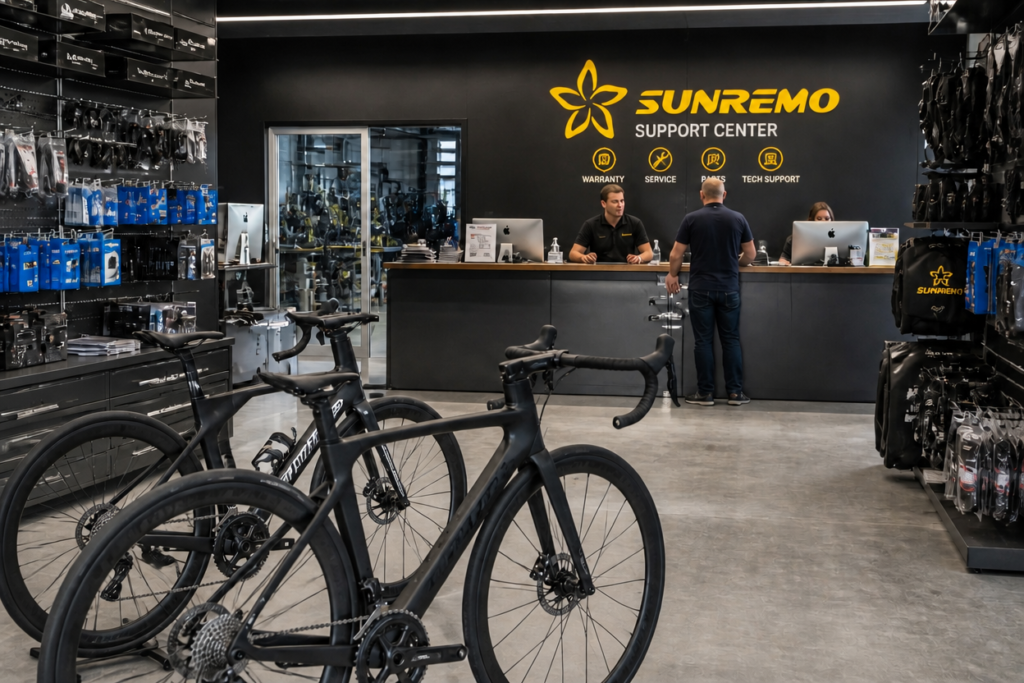
A rider who receives fast support after a problem is far more likely to:
Conversely, slow communication and unclear warranty policies can damage a dealer’s reputation even when the original product quality is excellent.
Collect:
A standardized intake form reduces processing time and prevents missing information.
Determine whether the issue falls into:
Examples:
Examples:
Examples:
Each category requires a different support process.
One of the biggest challenges in bicycle after-sales service is parts availability.
Dealers should maintain stock of:
Fast parts fulfillment reduces downtime and improves customer satisfaction.
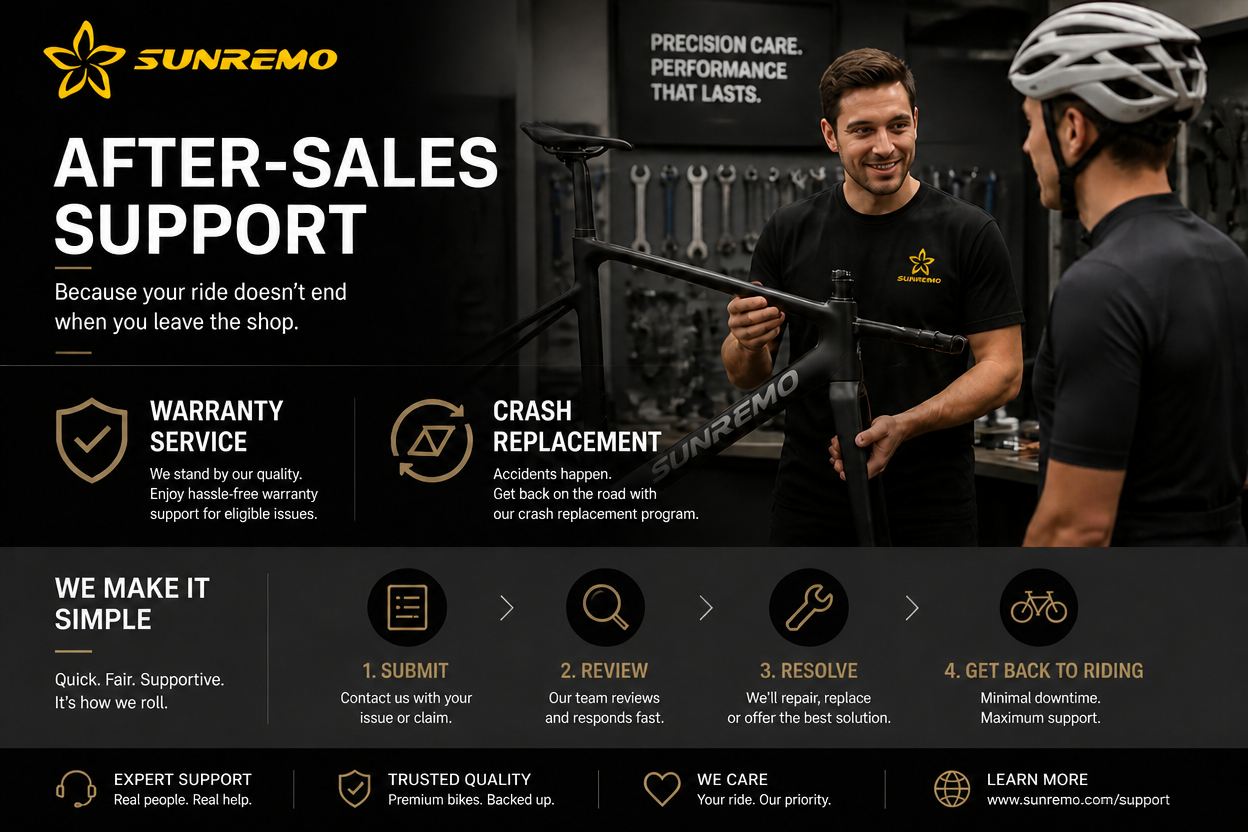
Many premium bicycle brands offer crash replacement support.
A typical process includes:
Crash replacement programs help:
An efficient warranty process should follow four stages:
Collect evidence and purchase records.
Confirm warranty eligibility.
Determine repair or replacement solution.
Deliver replacement parts or frame quickly.
To better understand how manufacturers validate frame quality before products reach dealers, see:
👉 https://sunremocycle.com/carbon-frame-quality-testing-guide/
Communication often determines customer satisfaction more than the final outcome.
Recommended standards:
Acknowledge every request.
Provide status updates.
Continue communication until resolution.
Customers are significantly more patient when they understand the timeline.
Before launching an after-sales program, confirm:
☑ Warranty policy documented
☑ Spare parts inventory established
☑ Crash replacement process defined
☑ Customer service response standards set
☑ Dealer staff trained
☑ Manufacturer support channel available
Bicycle after-sales service includes warranty support, spare parts supply, repairs, technical assistance, and customer communication after a bike is sold.
A crash replacement program allows customers to purchase replacement frames or components at a reduced cost after accidental damage.
Most dealers should aim to provide an initial response within 24 hours and a resolution plan within 3–5 business days.
Strong dealer support improves customer satisfaction, increases repeat purchases, and strengthens long-term brand loyalty.
Outstanding after-sales support is one of the strongest competitive advantages a bicycle dealer can build.
By combining efficient warranty handling, reliable spare parts supply, structured crash replacement programs, and proactive customer communication, dealers can create long-term customer relationships that drive sustainable growth.
For brands and distributors seeking a manufacturing partner that understands both production and dealer support requirements, learn more here:
👉 https://sunremocycle.com/oem-odm-service/