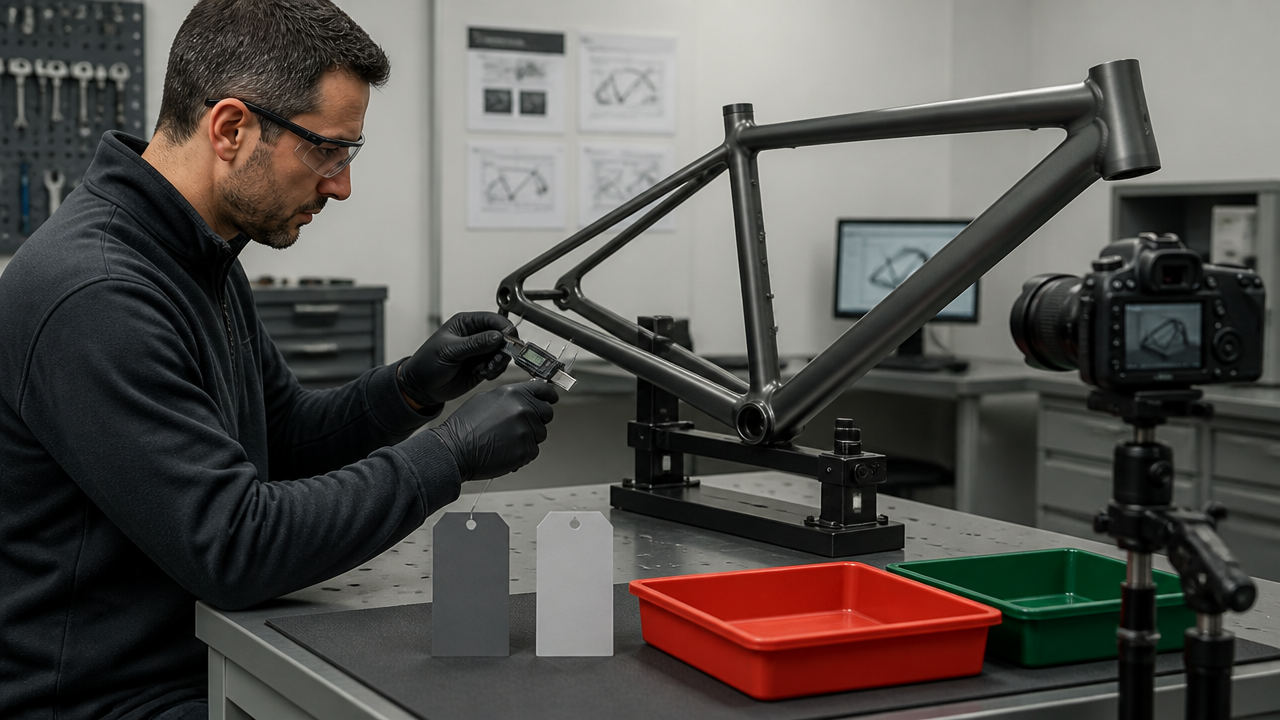
Sample approval is a shared record between a bicycle manufacturer and a B2B buyer. It should identify the model, configuration, revision, review fields, open questions and decision owner. Without that record, a sample can be approved in general terms while important differences remain unresolved.
A useful bicycle sample approval record identifies the sample, approved configuration, controlling revision, open issues and responsible approver. This gives the manufacturer and buyer one reference for deciding whether the sample is accepted, returned for revision or held for further evidence.Quick Answer: What Should a Bicycle Sample Approval Record Include?
A sample approval record should include product identity, revision, included scope, technical review fields, branding and finish, packaging, evidence documents, open questions, approval status and the next action. Changes after approval should receive a new revision or controlled change entry.This supplier-side process complements the
golden sample and change control guide.
Why Manufacturers Need a Controlled Sample Record
A sample may be reviewed by product, procurement, quality, sales and branding teams. Each team may focus on a different part of the product. A controlled record keeps those observations connected to one model and one configuration.
- It separates approved fields from open questions.
- It records which files were used for the review.
- It gives the buyer and manufacturer one decision history.
- It helps prevent an old image or drawing from controlling a later revision.
Step 1: Identify the Sample
| Field | Record |
|---|
| Product form | Complete bike, frameset, frame or component |
| Model and SKU | Approved public and internal identifiers |
| Sample revision | Drawing, configuration or document revision |
| Sample purpose | Fitment, finish, packaging, product-data or other review goal |
| Decision owner | Person authorized to approve or request changes |
If the model or revision is unclear, the sample should remain under review. Do not combine evidence from different model records without confirmation.
Step 2: Define the Review Scope
The manufacturer and buyer should agree what the sample will be checked against. The scope may include geometry, interfaces, included parts, artwork, finish, packaging and available documents.
Technical review questions
- Does the sample match the identified model and revision?
- Do the documented interfaces match the sample?
- Are included and optional parts clearly separated?
- Are the buyer’s required fitment fields documented?
- Which fields remain confirmation items?
Use the
carbon frame compatibility guide to organize questions, then confirm the exact model record.
Step 3: Review Finish, Branding and Packaging
For private-label projects, sample review also covers logos, decals, paint, carton marks, labels and product images. The review should state whether the sample matches the approved artwork and whether visible components are included in the commercial scope.The
private-label artwork approval checklist can support the branding handoff.
Step 4: Classify the Decision
| Status | Meaning | Next action |
|---|
| Approved | Review fields match the controlling record | Move to the next project gate |
| Conditionally approved | Open items have owners and conditions | Resolve before the defined release gate |
| Changes required | Sample does not meet the recorded scope | Issue a change entry and re-review |
| Not applicable | Field is outside the project scope | Record the reason |
Step 5: Control Changes After Approval
Every change should identify the previous state, new state, reason, owner, evidence and verification step. Changes to a component, finish, interface, packaging item or document can affect the dealer listing and customer support record.
Minimum change-log fields
- Change date and request owner.
- Previous and new revision.
- Affected product or document field.
- Buyer-facing content affected.
- Verification evidence and approval status.
The
manufacturing evidence center provides context for recording evidence scope and dates.
FAQ
Is a sample approval the same as a production release?
Not necessarily. The project record should define what the sample approval covers and which additional gates remain.
What if the buyer finds a mismatch?
Record the mismatch, affected revision, responsible owner and required verification. Do not close the issue until the agreed evidence has been reviewed.
Should every image be tied to a revision?
Where images show model-specific configuration or finish, the source and revision should be recorded so the listing team can avoid stale or misleading media.
What happens when a bicycle sample is not approved?
Record the mismatch, decision, affected revision, owner and next verification. The sample should remain open for revision or re-review until the project record states what has been accepted.
Can production start before written sample approval?
Do not assume that a quotation or sample shipment is production approval. The project record should state the approval gate and any remaining conditions before the next production decision is made.
Next Step: Set the Sample Review Gate
Define the sample purpose and required fields with Sunremo’s
sample order strategy, then send the project questions through the
B2B enquiry form.