
Subscribe now & get exclusive bike deals,
new arrivals alerts and pro riding tips!
Cycle green, stay fit, live better.

A carbon bike sample order should be used to evaluate product fit, packaging, communication, assembly, documentation, finish quality and sales readiness before a bulk order. Dealers and distributors should not treat samples as casual one-off purchases. A structured sample order helps confirm whether a bike, frameset or wheelset matches the intended market and whether the supplier can support repeat orders. The sample review should include mechanic inspection, sales-team feedback, customer positioning and a clear list of questions before scaling.
A sample order is the bridge between product research and bulk purchasing. It helps B2B buyers confirm whether a product can become part of a real range.
This article supports the carbon bike product line planning guide and should be used before committing to a larger order. For commercial next steps, review Sunremo’s bicycle pricing and MOQ page.
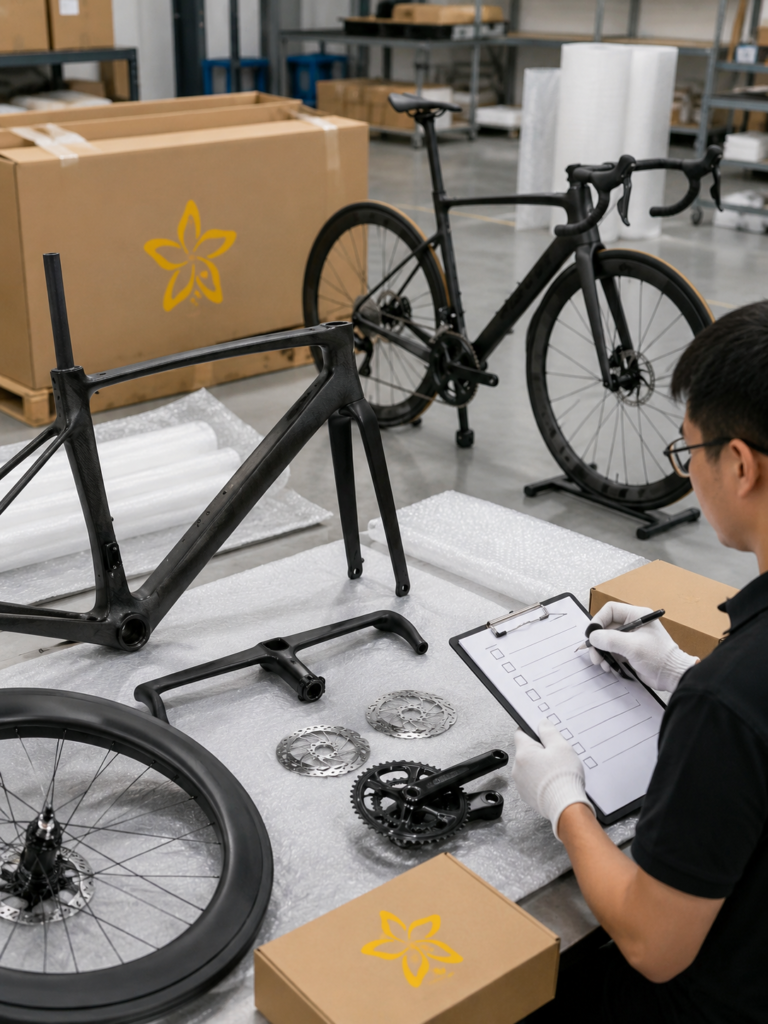
The sample should fit the intended role in your range. If it is meant to be an endurance road bike, the sales and fit story should support that role. If it is meant to be a gravel model, the terrain and customer positioning should be clear.
The buyer should review available specifications, assembly notes, product photos, packaging information and any relevant quality-control documentation.
Supplier communication during a sample order often predicts the experience during larger orders. Track response clarity, question handling and follow-up.
Mechanics should inspect the sample and record assembly questions. This is especially important for framesets, cockpit routing and wheel compatibility.
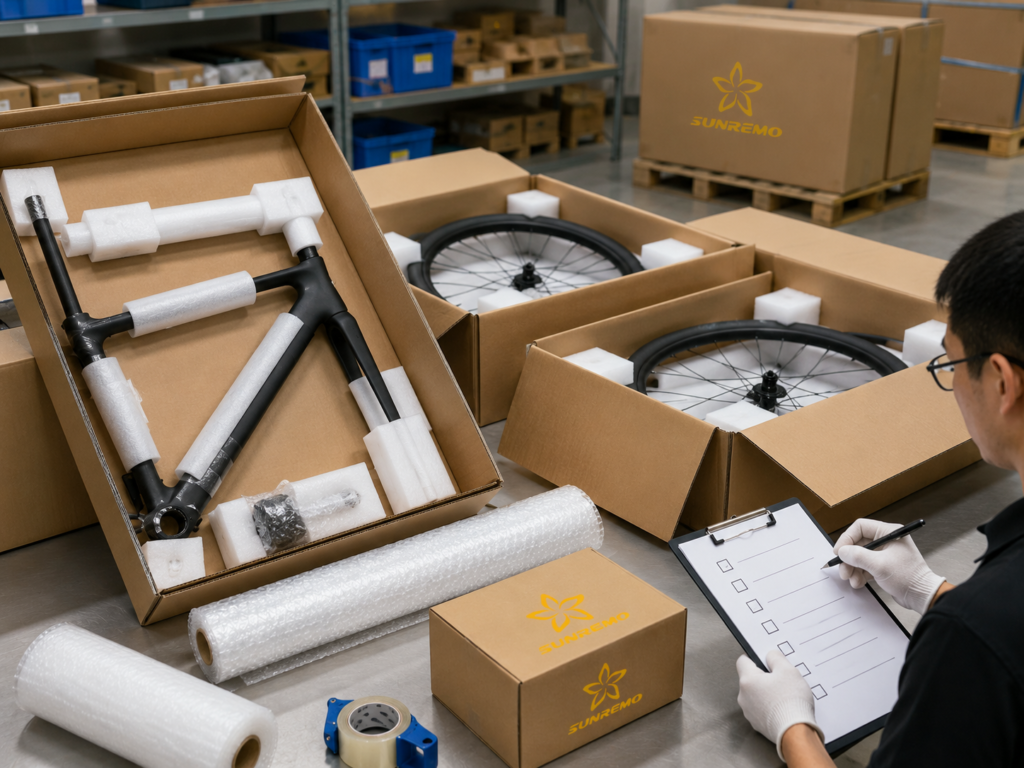
The owner or purchasing lead should confirm the product’s commercial role and whether it fits the business plan.
The mechanic should review assembly, compatibility and service concerns. Link quality-sensitive review steps to bicycle quality control.
Sales staff should test whether the product story is easy to explain. If the model requires too much explanation, the range positioning may need adjustment.
Marketing staff should identify what content will be needed: product photos, comparison pages, FAQs, technical notes and customer objections.
| Result | Meaning | Next Step |
|---|---|---|
| Approved | Product fits role and support expectations | Plan first dealer or bulk order |
| Approved with questions | Product is promising but needs clarification | Resolve documentation or support questions |
| Reposition | Product is good but not for the original role | Move to another price tier or use case |
| Reject | Product does not fit business need | Do not scale without major reason |
A sample order helps verify product fit, documentation, communication, packaging and workshop readiness before committing to a larger order.
One sample may be enough for initial screening, but larger programs may need multiple sizes, builds or product categories before scaling.
Mechanics should check assembly questions, fit interfaces, routing, wheel and tire planning and any unclear documentation. Product-specific checks should follow current manufacturer documentation.
If wheels are part of the planned product line or upgrade strategy, sample wheelsets should be reviewed together with bikes or framesets.
The main mistake is judging only appearance. A sample should be reviewed for commercial fit, service readiness, documentation and repeat-order potential.
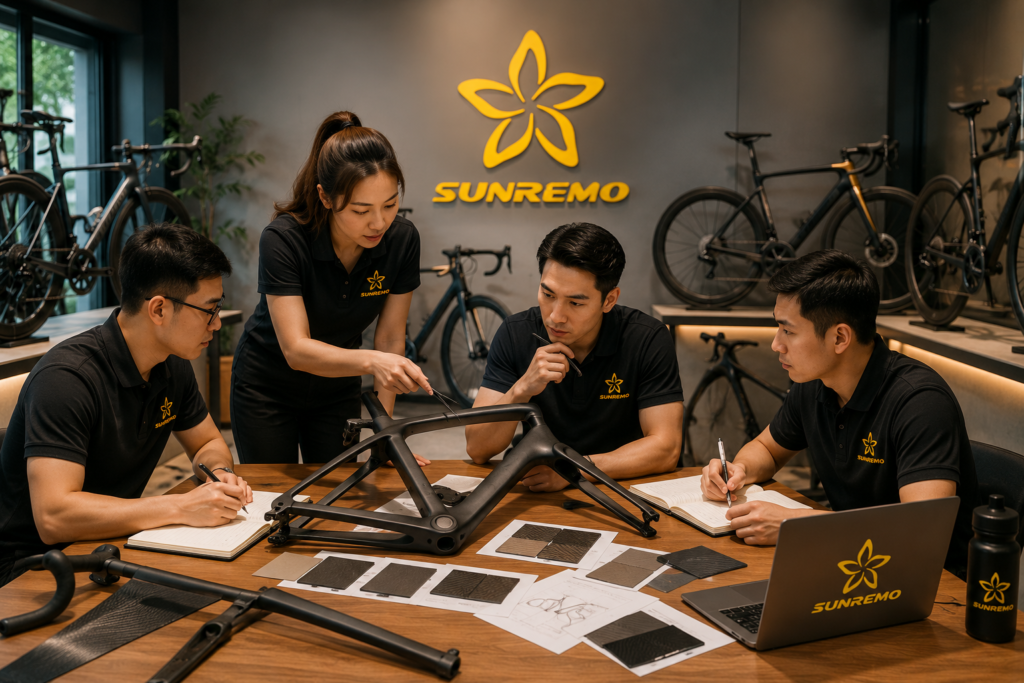
Before scaling your order, send Sunremo your planned product role, sample order questions and target market through the B2B survey.
Related buyer resource: B2B bicycle models.
Use this record when a dealer or distributor receives a sample. Keep observations tied to the exact model, configuration and order reference; do not generalize one sample result to every product.
| Check area | Record | Evidence or follow-up |
|---|---|---|
| Order identity | Model, configuration, quantity and order reference | Confirm against the approved request |
| Packaging | Carton condition, protection and included-parts list | Photos and missing-item notes |
| Appearance | Finish, paint, decals and visible damage | Photo reference and issue status |
| Fit and interfaces | Observed assembly or compatibility questions | Exact component, size and revision |
| Documentation | Specification, assembly and product-data gaps | Document name, revision and owner |
| Decision | Approve, approve with actions, or hold | Reviewer, date and open-action owner |
For structural or compliance questions, use the Bicycle Quality Control resource and request model-specific evidence before a bulk decision.