How to Evaluate an OEM Bicycle Handlebar Manufacturer’s ISO 4210 Fatigue Test Evidence

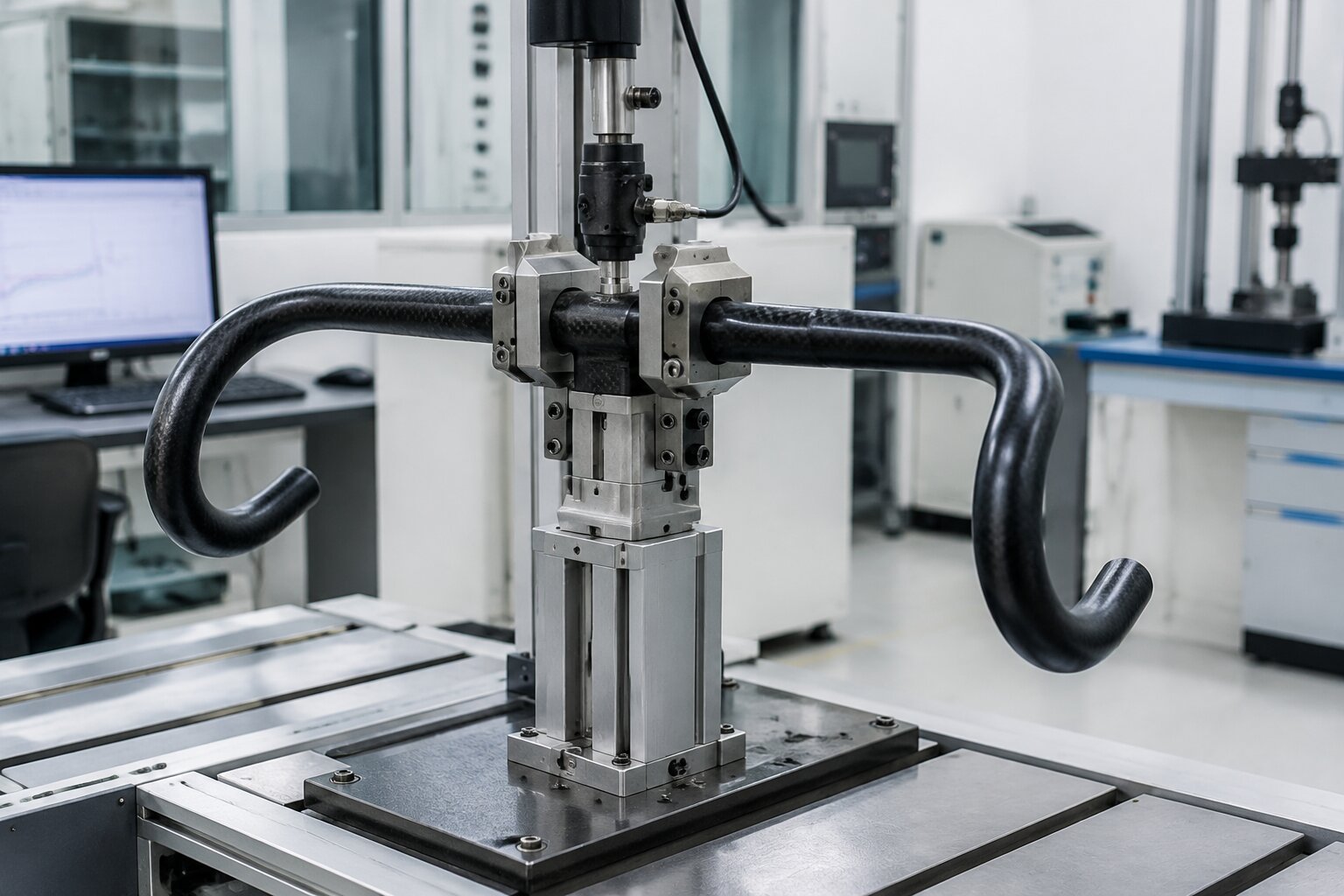
ISO 4210 fatigue-test evidence for an OEM bicycle handlebar should identify the tested model, revision, configuration, test scope, method, issuing body, date, and result so buyers can match the document to the product they plan to order.
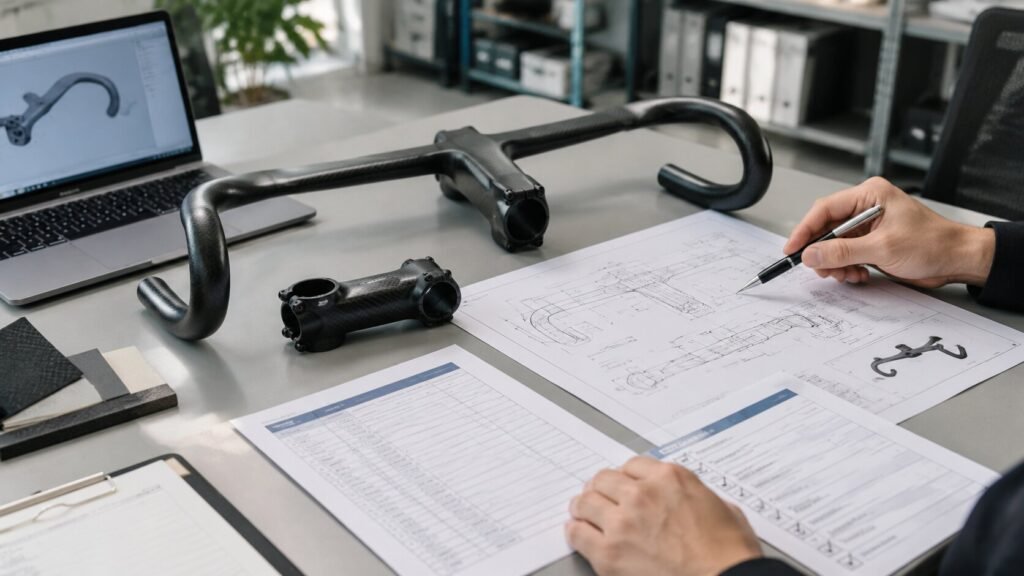
Choosing an OEM bicycle handlebar manufacturer is not just a matter of comparing carbon layups, finishes, prices, or catalogue photos. A buyer also needs to know whether the supplier can connect its test evidence to the exact handlebar, stem, or integrated cockpit configuration being quoted.That is where ISO 4210 fatigue-test evidence becomes a practical sourcing question. A short statement such as “ISO 4210 tested” does not identify the test scope, sample, revision, laboratory, or production configuration. This guide gives bike brands, dealers, and product managers a structured way to review the evidence before requesting samples or approving bulk production.Featured answer: ISO 4210 fatigue-test evidence for an OEM bicycle handlebar should identify the tested model, revision, configuration, test scope, method, issuing body, date, and result so buyers can match the document to the product they plan to order.
Carbon Handlebar Engineering Review

Why Does the Exact OEM Handlebar Manufacturer Matter?

A handlebar project can fail commercially even when the product looks attractive. A supplier may quote a bar-only product while the buyer expects an integrated cockpit. A drawing may show one clamp interface while the sample uses another. A report may refer to an earlier revision, while the production quotation includes a changed stem, spacer, hardware set, or cable-routing arrangement.These gaps create three types of risk:
  • Technical risk: the tested configuration may not match the planned bicycle, fork, stem, headset, brake, shifting, or routing interfaces.
  • Documentation risk: a general supplier statement may be mistaken for product-specific test evidence.
  • Commercial risk: a late design change can trigger another sample, new artwork, revised product data, or a delayed launch.
The goal of an OEM supplier review is therefore not to collect the largest number of certificates. It is to build a traceable chain from the buyer’s requirement to the quoted model, the sample, the test document, and the final approved production revision.

What Should ISO 4210 Fatigue-Test Evidence Tell a Buyer?

ISO 4210 is a series of international requirements for bicycle safety and testing. The relevant requirement depends on the bicycle, component, intended use, market, and applicable part of the standard. Buyers should consult the current ISO catalogue and ask the supplier to identify the exact requirement used for the proposed product.For a useful technical review, the evidence should help answer the following questions:
  1. What exact component or cockpit package was tested?
  2. What model code, drawing number, and revision were used?
  3. What test scope and method were applied?
  4. What sample configuration and hardware were included?
  5. Who issued or performed the test?
  6. When was the test completed, and what document revision is current?
  7. What result or acceptance decision is recorded?
  8. How does the tested sample relate to the buyer’s proposed production version?
If a document does not answer every question, that does not automatically mean the supplier is unsuitable. It does mean the open item should remain visible in the RFQ and approval record instead of being converted into an assumption.

How to Compare the Main Types of Supplier Evidence

Not all documents carry the same decision value. The table below helps a buyer decide what each document can and cannot establish.
Evidence typeBest useStrengthBuyer action
Product drawing or specificationConfirm model, dimensions and interfacesHigh for product definitionMatch it to the quotation and sample
Laboratory test reportReview a stated test method and resultHigh when scope and sample are clearCheck issuer, date, model and revision
Supplier internal test recordUnderstand in-house checks and development historyMedium, depending on detailAsk who approved it and what it covers
Inspection recordCheck dimensions, finish or assembly at a stageMedium for the recorded inspectionDo not treat it as a fatigue report
Catalogue or marketing statementIdentify a product or starting point for questionsLow as standalone test proofRequest supporting documents
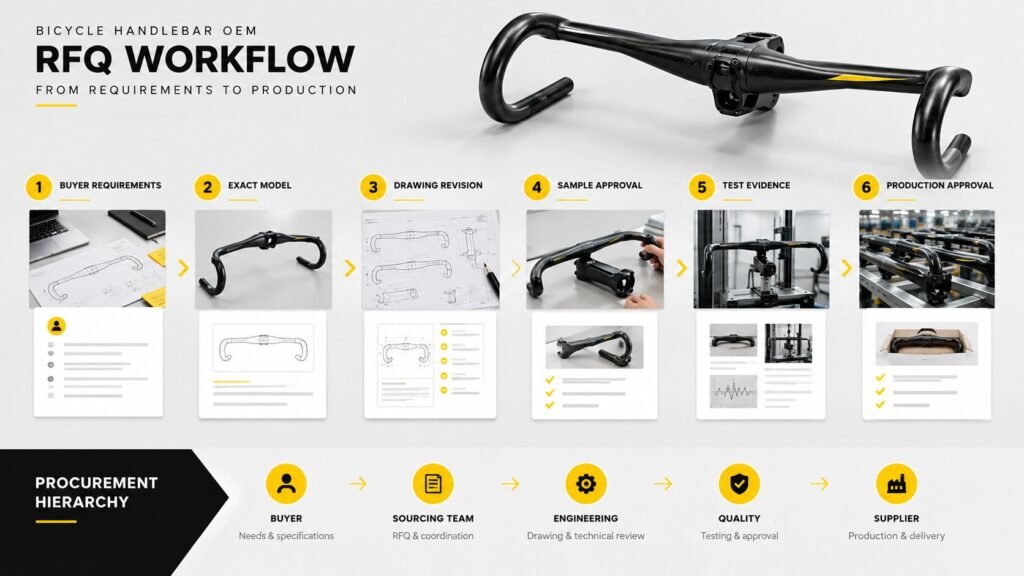
A document’s value depends on scope and traceability, not on its file name. A document called “certificate” may not provide the same information as a model-specific test report. Use only the wording supported by the document itself.Bicycle Handlebar OEM RFQ Workflow

Five Steps to Evaluate an OEM Bicycle Handlebar Supplier

Step 1: Define the component and the intended bicycle

Start with the use case rather than the supplier’s catalogue. State whether the project concerns a road bar, track bar, mountain-bike bar, time-trial cockpit, flat bar, stem, or integrated cockpit. Add the bicycle category, intended rider use, target market, and whether the request is for a bar-only component or a complete package.Then list the known interface requirements: clamp diameter, stem relationship, fork and headset interface, brake and shifting arrangement, cable routing, spacer requirements, and included hardware. The more specific the input, the easier it is for an OEM bicycle handlebar manufacturer to return a comparable quotation.

Step 2: Request an exact model and revision

Ask the supplier to identify the exact model code, drawing number, revision, dimensions, material description, finish, hardware, and included parts. For a private-label project, keep the branding and packaging request separate from the technical product identity.Do not approve a report that only says “carbon handlebar” if the quotation refers to a particular width, reach, drop, stem interface, extension, or routing configuration. The evidence must be connected to the product being evaluated.

Step 3: Ask what ISO 4210 scope was used

Ask the supplier to state the relevant ISO 4210 requirement or test scope in writing. Request the method description, test setup, load or force definition, cycle requirement, acceptance criteria, and result as they appear in the applicable document.Do not ask the supplier to replace the standard with a marketing summary. A technically useful answer should make it possible for the buyer’s engineer, compliance reviewer, or responsible product owner to decide whether the scope matches the project.

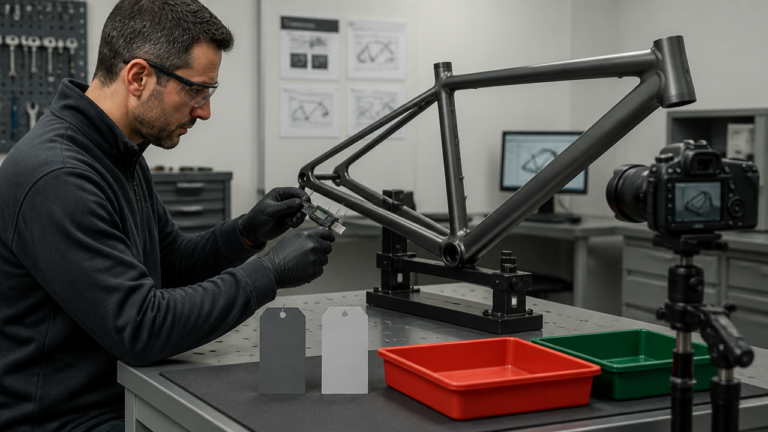
Step 4: Match the test sample to the production configuration

Compare the test sample with the proposed production version across model, revision, dimensions, material or construction, hardware, interface, finish, assembly, and intended use. For an integrated cockpit, confirm whether the test included the bar, stem, spacers, face plate, extensions, routing parts, and other components shown in the quotation.If the supplier proposes a change after testing, record the change and ask whether the existing evidence remains applicable. A change-control question is often more valuable than another generic document request because it connects the evidence to the product lifecycle.

Step 5: Record the approval decision and open questions

Use a simple evidence register with the document name, model, revision, issuer, date, test scope, reviewer, decision, and open question. Mark each item as confirmed, partly confirmed, or not supplied. Keep the unresolved items visible in the sample approval and purchase records.This approach protects both sides of the project. The buyer knows what is being approved, and the supplier receives a clear list of information needed to close the quotation.

What Should Be Included in a Bicycle Handlebar OEM RFQ?

A useful RFQ should allow suppliers to quote the same scope. Include:
  • Component type and intended bicycle category
  • Target use and market
  • Required width, reach, drop, rise, clamp and interface dimensions
  • Frame, fork, headset, stem, brake, shifting and cable-routing interfaces
  • Bar-only or integrated-cockpit scope
  • Material or construction requirements already defined by the buyer
  • Branding, finish, artwork, packaging and dealer-data requirements
  • Sample quantity and sample acceptance criteria
  • Required ISO 4210 test scope or other project evidence
  • Document reference, model revision and change-control requirements
  • MOQ, quotation validity, delivery assumptions and commercial exclusions
For the broader component workflow, see the Bike Handlebar and Cockpit Sourcing Guide. For a track-specific project, use the Track Bike Handlebar RFQ Checklist.

Three Costly Mistakes to Avoid

Mistake 1: Treating a general ISO statement as product proof

Mistake 2: Confusing a bar-only report with cockpit approval

Mistake 3: Ignoring changes after testing

Four Expert Tactics That Improve Supplier Decisions

1. Ask for an evidence map, not a document dump

Request a short table linking each buyer requirement to a drawing, test report, inspection record, sample note, or written confirmation. This makes missing evidence visible and reduces time spent reviewing unrelated files.

2. Separate product identity from private-label identity

Keep model code, revision, dimensions, interface, and construction separate from logo, artwork, packaging, and marketing copy. This helps the buyer assess whether a branding change is also a technical change.

3. Review the first sample against the same evidence register

Do not create a new checklist after the sample arrives. Compare the sample to the approved RFQ fields and report references. Record differences immediately, including hardware, finish, interface, routing, and supplied parts.

4. Price the verification work before comparing supplier prices

A lower quotation may require more buyer-side engineering time, additional samples, document clarification, or a longer approval cycle. Track the time and external review needed to close evidence gaps. The lowest unit price is not necessarily the lowest project cost.

Frequently Asked Questions

Does an ISO 4210 fatigue-test report prove that every handlebar from a supplier is compliant?

No. The report must be matched to the exact model, revision, configuration, test scope, and applicable market requirements. A supplier-level statement or a report for another product should not be presented as proof for the buyer’s proposed handlebar.

What should a buyer ask an OEM bicycle handlebar manufacturer before ordering a sample?

Ask for the exact model, drawing and revision, dimensions, interfaces, included hardware, intended use, available ISO 4210 test scope, sample identity, document issuer, test date, and change-control process. Put unanswered items into the sample acceptance checklist.

Does a handlebar fatigue test automatically cover an integrated cockpit?

Not necessarily. An integrated cockpit can include a stem, spacers, face plate, extensions, routing parts, and different assembly conditions. Ask what the tested configuration included and compare it with the complete package quoted for the project.

What if the supplier has no ISO 4210 fatigue-test report?

Keep the gap visible and ask what alternative evidence exists, who can review it, and what additional testing or approval step is needed. Do not describe the product as tested or certified until the supporting document and its scope have been confirmed.

Can a private-label logo change affect existing test evidence?

It depends on the change. A branding-only update may differ from a change to dimensions, construction, hardware, interface, assembly, or intended use. Ask the supplier to assess the exact change and record whether the existing evidence remains applicable.

How should a buyer measure the cost of supplier verification?

Track the engineering hours, document-review time, sample cycles, external testing, translation, and launch delay required to close open questions. Compare that project cost with the quotation difference. This produces a more useful decision than comparing unit price alone.

Conclusion and Next Action Plan

A strong OEM bicycle handlebar decision connects buyer requirements, supplier documents, product revisions, samples, and production changes. ISO 4210 fatigue-test evidence is useful only when its scope and sample identity are clear. Use the evidence register and RFQ fields in this guide to turn a general supplier claim into a reviewable procurement record.Practical launch plan: start with one exact handlebar or cockpit model, one written RFQ, and one evidence register. Ask the supplier to return the model revision, test scope, sample identity, document source, and open questions. Review the response before expanding the request to a full product range.After the product scope is clear, use Sunremo’s OEM/ODM service page as the next enquiry destination. Confirm product-specific testing, compatibility, certification, MOQ, lead time, and warranty terms for the actual project before using them in a purchase decision.
Share your love

Leave a Reply

Your email address will not be published. Required fields are marked *