
Subscribe now & get exclusive bike deals,
new arrivals alerts and pro riding tips!
Cycle green, stay fit, live better.

Quick Answer Open mold carbon frames use existing factory tooling shared across multiple buyers, with a project-specific MOQ, tooling scope, and lead-time terms that must be confirmed for the selected model and buyer project. Private mold frames use tooling exclusively developed for one brand, requiring a separately agreed engineering, tooling, sample, schedule, […]
Open mold carbon frames use existing factory tooling shared across multiple buyers, with a project-specific MOQ, tooling scope, and lead-time terms that must be confirmed for the selected model and buyer project. Private mold frames use tooling exclusively developed for one brand, requiring a separately agreed engineering, tooling, sample, schedule, and ownership arrangement that must be documented before production. Choose based on the confirmed model scope, evidence, commercial terms, customization needs, and brand strategy.
For a model-specific review, buyers should confirm the exact platform, revision, geometry, component interfaces, sample record, manufacturing evidence, applicable test documents, branding scope, packaging, product data, and commercial terms. Use the Carbon Frame Manufacturing Evidence Guide, Carbon Frame Quality Testing Guide, and Carbon Frame Compatibility Guide as supporting workflows.
| Factor | Open Mold | Private Mold |
|---|---|---|
| MOQ | Confirm per project | Confirm per project |
| Mold cost | Confirm per project | Confirm per project |
| Lead time | Confirm per model | Confirm per model (after 4–6 month development) |
| Geometry control | Confirm for the selected scope | Potentially broader; confirm |
| Brand differentiation | Low | High |
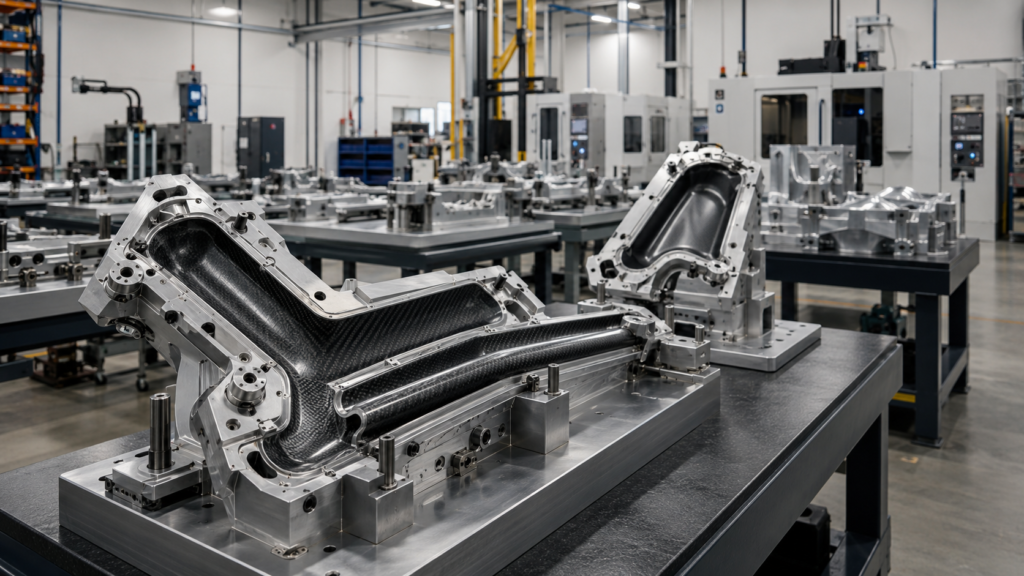
An open mold carbon frame is built from tooling that the factory developed in-house and offers to any qualified buyer. The supplier’s quotation should state who is responsible for existing tooling, what order conditions apply, and whether any tooling or development charge is included.
Open-mold status does not prove either quality or poor quality. Review the exact model’s materials, process records, inspection information, and applicable test documents rather than treating the mold arrangement as a quality conclusion.
Typical open mold buyers include independent bike shops building their house line, e-commerce sellers testing a new SKU, regional distributors filling inventory gaps, and emerging brands validating a market before investing in custom tooling.
The trade-off is differentiation. Because the same mold can be sold to any buyer worldwide, your competitor in the next country may be selling the same frame under a different paint job. Logo, paint, and decal customization are always possible, but the silhouette is shared.
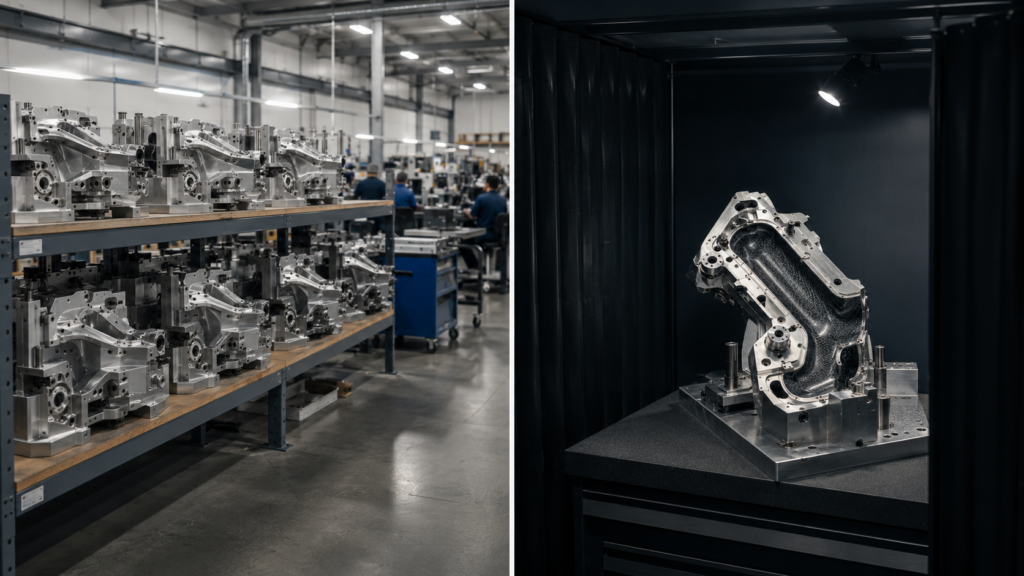
A private mold (also called custom mold or exclusive mold) is tooling developed specifically for one brand. The brand pays for the mold development, owns the exclusive right to use it, and gets a frame geometry and visual identity that no other company can sell.
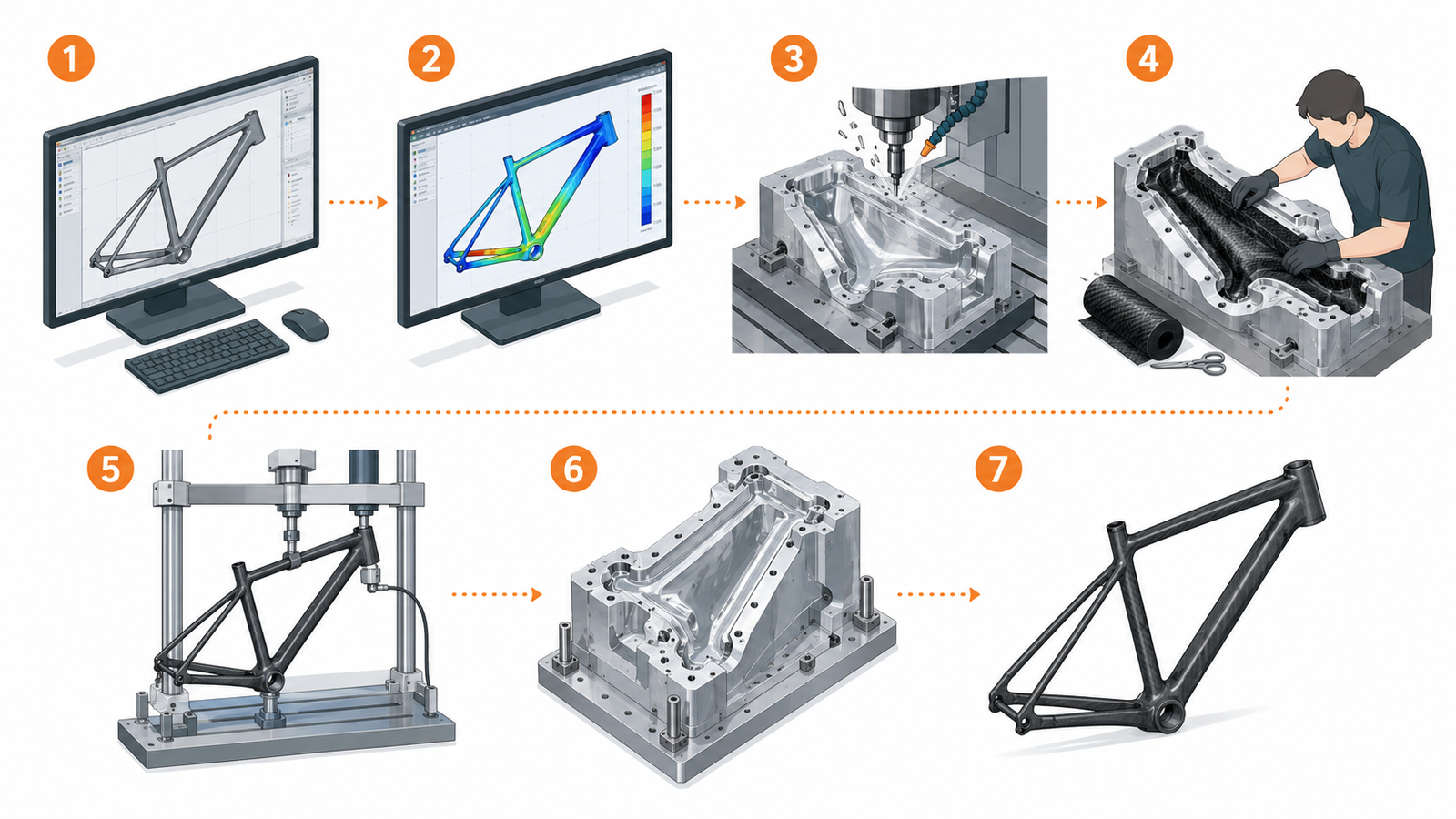
A private development may include design, engineering review, tooling, prototype, validation, pilot production, and production approval. The actual stages, documents, standards, responsibilities, and schedule must be agreed for the selected project.
Development timing and the first production schedule depend on the selected design, engineering scope, samples, validation, tooling, approvals, and commercial plan. Request a written project schedule instead of relying on a generic range.
Private mold buyers are typically established brands launching a new model, regional brands wanting genuine differentiation in a saturated market, dealers with proven sell-through who want to capture full margin on an exclusive product, and cycling teams or sponsors with specific geometry requirements.
| Dimension | Open Mold | Private Mold |
|---|---|---|
| MOQ | Confirm per project | Confirm per project |
| Mold investment | Confirm for the selected scope | Confirm per project |
| Time to first delivery | Confirm per model | Project-specific |
| Production lead time (repeat orders) | Confirm per model | Confirm per model |
| Logo and paint customization | Confirm options | Confirm options |
| Geometry customization | No | Potentially broader; confirm |
| Cable routing customization | Limited | Potentially broader; confirm |
| Mold ownership | Factory | Exclusive use to buyer |
| Design IP protection | Confirm for the selected scope | Available (legal review required) |
| Risk of identical competitor product | High | Confirm for the selected scope |
| Per-unit cost at low volume | Low | High |
| Per-unit cost at high volume | Same | Lower (mold amortized) |
| Best fit | Inventory, market testing | Brand building, scale |
A private-mold proposal may include design or engineering, tooling, prototype work, validation, pilot production, quality fixtures, documentation and project management. The supplier should separate each scope item and state what is included, excluded, refundable, transferable or subject to a new approval.
| Cost or responsibility area | Buyer should request |
|---|---|
| Design and engineering | Deliverables, revision control and ownership terms |
| Tooling or mold | Scope, custody, maintenance, lifecycle and transfer terms |
| Prototype and validation | Sample configuration, approval gate and applicable documents |
| Pilot and production setup | Quality records, change control and production assumptions |
| Commercial terms | Milestones, credits, cancellation and exit conditions |
This is the most misunderstood part of OEM bicycle manufacturing, and the source of most disputes between brands and factories.
Some agreements leave physical custody with the factory while granting the buyer defined use rights. The physical location and custody of tooling should be stated in the contract. The buyer should also confirm use rights, maintenance responsibility, transfer conditions, and what happens if the project or supplier relationship ends.
Three contractual variations exist, and brands need to know which one they are signing:
Exclusive use is the most common arrangement. An exclusive-use clause may restrict use for other buyers, but the scope, term, exceptions and remedy must be written into the agreement. Mold maintenance, lifecycle, replacement and related costs must be confirmed in the agreement. This is what most buyers actually want.
Mold transfer is a separate clause that allows the buyer to physically take the mold to another factory after a defined period or upon contract termination. This requires explicit written agreement and often a transfer fee. Without this clause, you cannot move production even if the relationship ends.
Shared mold is sometimes marketed as “semi-custom” or “near-private.” The factory develops a base mold and offers cosmetic variations to multiple buyers. This is essentially a dressed-up open mold and should not be confused with a true private mold. If a quote differs materially from the expected project scope, ask whether it covers shared tooling, engineering, prototype work, validation, or a different ownership arrangement.
Always require these clauses in the contract: exclusive use confirmation, mold maintenance responsibility, mold lifecycle and replacement terms, IP ownership of the design files, and termination conditions including what happens to the mold if either party exits.
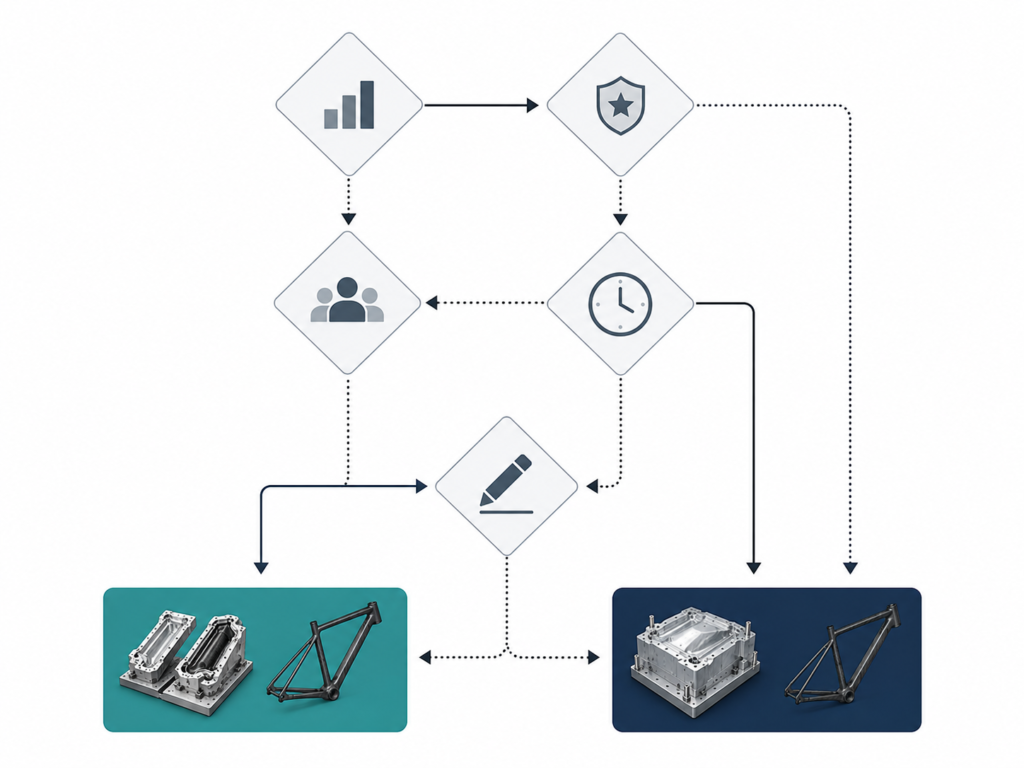
1. What’s your annual sales volume? Lower-volume projects may favor an existing platform, while larger or differentiated programs may justify investigating private development. Compare the complete project scope, evidence, investment, expected demand, and ownership terms rather than applying a universal break-even rule.
2. Do you have an established brand? Private mold rewards brands that already have distribution, marketing reach, and customer trust. Without those, even an exclusive frame will not sell itself.
3. Can you tolerate identical frames in the market? If you are selling to riders who research extensively (high-end road, gravel enthusiasts), they will spot a shared open mold quickly. If you sell into a less informed segment or focus on service and fit, open mold is fine.
4. Do you have in-house design capability? True private mold development needs design input from the buyer side, even if the factory provides ODM support. If you cannot describe the geometry and ride character you want, you are not ready to invest in a mold.
5. What’s your time-to-market urgency? Open mold ships in Confirm per model. Private mold ships in Project-specific. If the launch timing is fixed, compare the available platform and development route against a written schedule before committing.
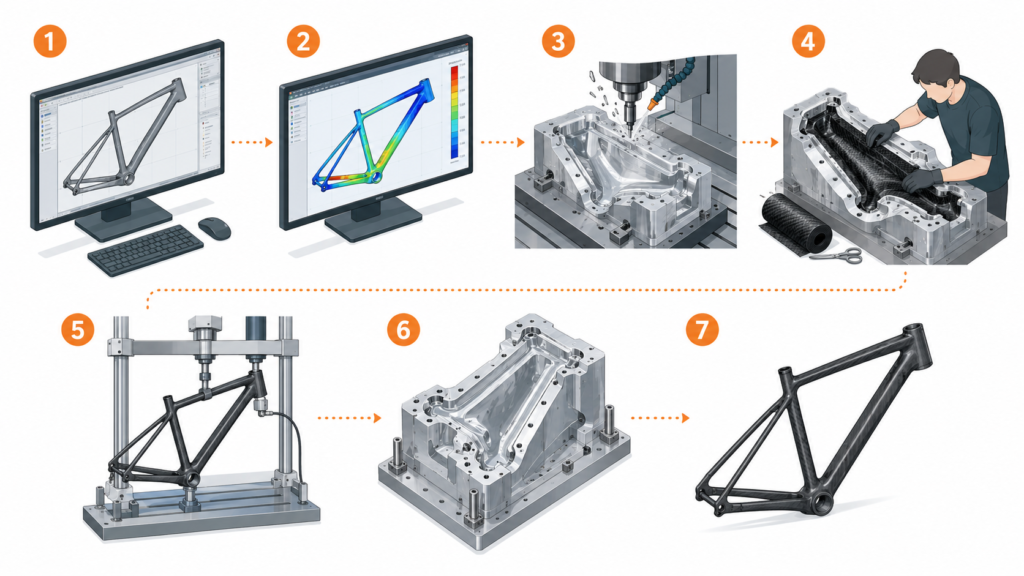
The strategy we recommend most often to growing brands is a phased approach.
In year one, build sales volume and customer feedback using open mold frames with custom paint and branding. This validates the market, builds cash flow, and teaches you what your customers actually want in a frame.
In year two, introduce a single private component or a partial private mold (a custom seatpost, fork, or cockpit) to differentiate visually without committing full mold capital.
In year three, with proven sell-through and clear customer feedback, invest in a complete private mold frame. By this point you know your geometry, your price point, and your volume, so the mold investment is informed rather than speculative.
This path is also how most successful direct-to-consumer carbon brands actually started, even the ones whose marketing implies they were custom from day one.
Investing in private mold too early is the most expensive mistake in this industry. A tooling investment that is not matched to the brand’s demand and distribution can create avoidable project risk.
Choosing the wrong factory and discovering the “private mold” was reused for another buyer is the second. This is why supplier vetting, factory audits, and written exclusivity clauses matter. (See our guide on How to Choose a Carbon Bike Supplier for a full vetting checklist.)
Skipping written IP terms is the third. A handshake agreement does not protect the design when a sales manager leaves the factory and starts a competing company.
Underestimating development time is the fourth. Brands should set launch dates only after the supplier confirms the project schedule, approval gates, validation scope and production assumptions in writing.
What’s the minimum order for an open mold carbon frame?
Most factories accept Confirm per project per model per order. Some accept single units for sample orders, but per-unit cost rises significantly below MOQ.
Can I put my logo on an open mold frame?
Yes. Paint, decals, packaging and other branding options may be available, but the exact scope must be confirmed for the selected model. A shared frame silhouette does not become an exclusive design through branding alone.
How long does it take to develop a private mold carbon frame?
Project-specific for a road or gravel hardtail from kickoff to first production batch. Add 1–2 months for full-suspension MTB or aero road frames with complex tube shapes.
Can I patent a private mold frame design?
Design registration, confidentiality, non-use, non-disclosure and exclusivity options depend on the destination markets and contract. Obtain legal advice and agree the ownership and filing responsibilities before public launch.
Is the mold cost refundable?
Refunds, credits and development-fee treatment are contract terms. Request the agreed outcome in writing before signing the development agreement.
Can I move my private mold to another factory?
Only if the contract explicitly includes a mold transfer clause. Standard contracts give exclusive use but keep the mold physically at the original factory.
Does Sunremo offer both open mold and private mold options?
Sunremo can review open-mold and private-development paths for road, gravel and MTB projects. Exact model availability, customization scope, order terms, documentation and project responsibility must be confirmed for each enquiry.
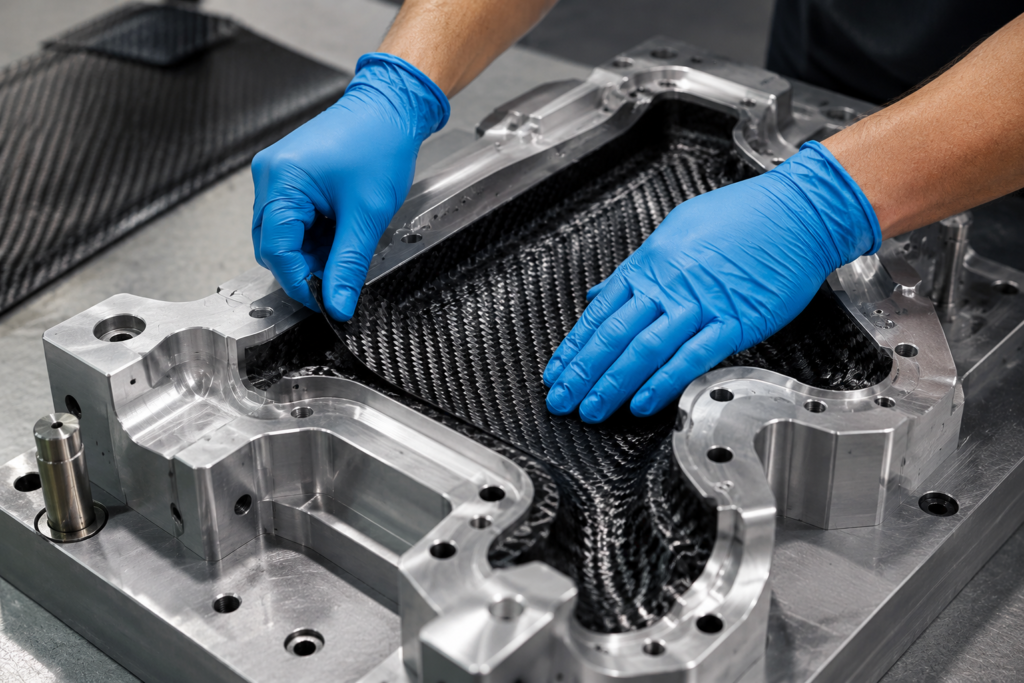
If you are starting out or filling inventory, our open mold catalog gives you immediate access to road, gravel, and MTB frames with low MOQ and full custom paint. Request the catalog to see current offerings.
If you are ready to develop your own frame, our engineering team handles the full pipeline from CAD to production. Book a 30-minute consultation to discuss timeline, cost, and feasibility for your project.
After selecting the appropriate development route, review OEM and ODM options with the exact product, tooling and documentation requirements.