Subscribe now & get exclusive bike deals,
new arrivals alerts and pro riding tips!
Cycle green, stay fit, live better.

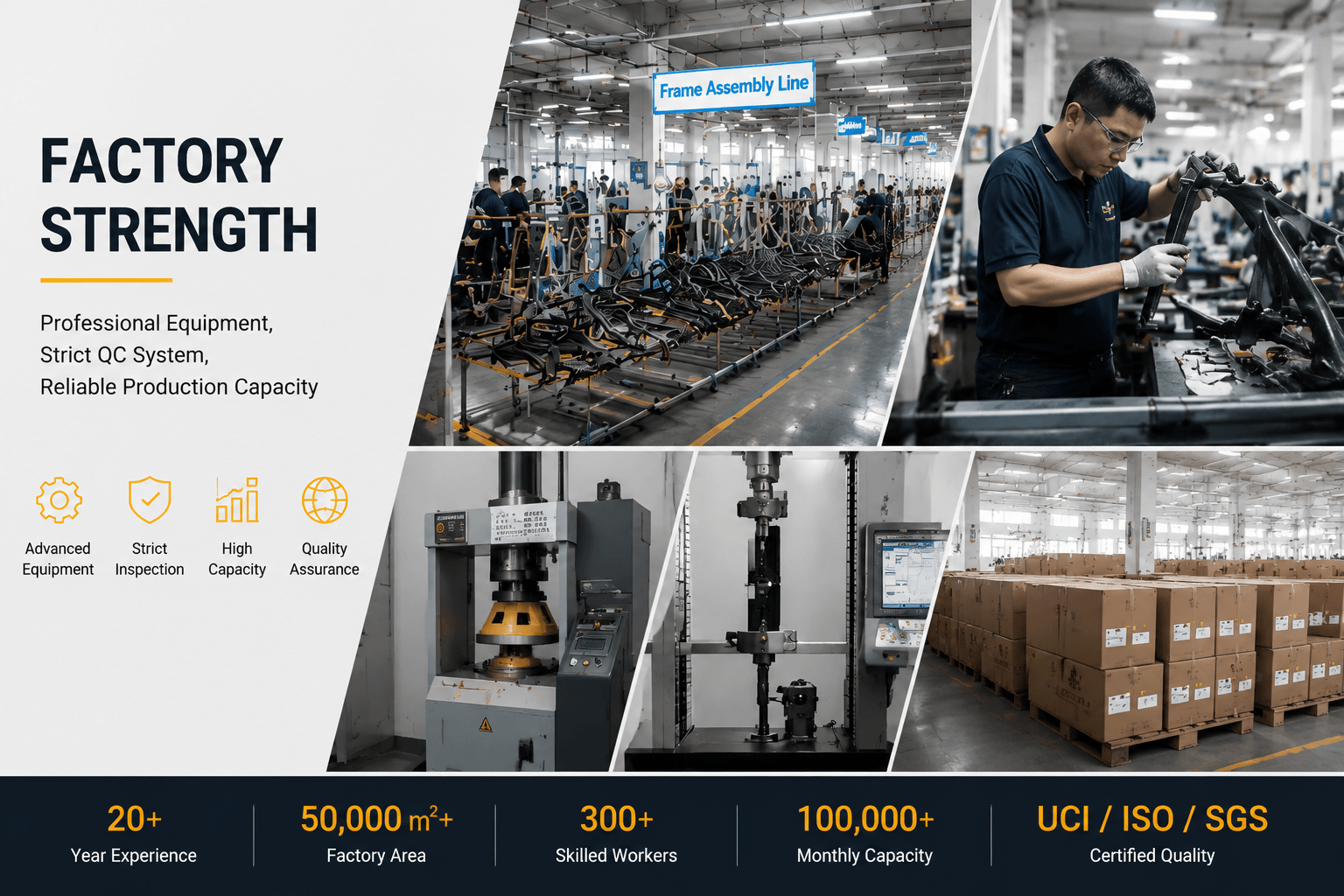
Choosing a carbon bike supplier is a risk-management decision for bike shops, distributors and private-label brands. The strongest evaluation is based on documents that apply to the exact product, a controlled sample review and written commercial terms—not a supplier’s general marketing claims.
A supplier may act as a trading company, platform owner, contract manufacturer, development partner or a combination of these. Do not infer ownership from a website or showroom. Ask which legal entity signs the contract, which facility performs each operation and which party controls drawings, tooling, inspection and shipment.
A report for one carbon frame does not automatically support another model, size or revision. Create a document register for the selected product and record the model identifier, size, drawing revision, report identifier, issuing organization and date.
Ask which standards and market requirements apply to the exact product. Review the full report where available and confirm the tested model, size, configuration, issuing organization and report identifier. If a buyer’s market requires additional documentation, include that requirement in the project brief before quotation.
Do not treat a logo, certificate image or general statement such as “tested to international standards” as product-specific evidence.
A sample should be reviewed against a written checklist. Record visible finish, dimensions, compatibility, included parts, packaging, assembly questions and buyer-facing product data. Photograph issues and record the agreed correction before approving production.
Use the carbon frame checklist and the carbon frame quality testing guide as supporting resources.
Before production, both parties should identify the approved specification revision. The order should explain who can request a change, how the impact is reviewed and when a new sample or approval is required. Verbal changes create avoidable disputes.
Ask for the inspection points that apply to the selected product and the record produced at each stage. Agree on how defects are classified, who reviews a non-conformance and what evidence is required before a shipment is released.
A buyer may use its own inspection team or an independent inspection provider. The appropriate method depends on product risk, order scope and contractual requirements.
The quotation and contract should identify included items, excluded work, tooling ownership, payment milestones, packaging, shipment responsibility, delivery terms and the process for handling approved changes. Avoid relying on “standard industry terms” when the parties have not defined them.
Ask who receives a claim, what evidence is required, how responsibility is assessed and which remedies may apply. If replacement parts matter to the buyer’s business, record the required parts and support period in the commercial agreement.
Not automatically. The decision depends on transparency, project control, documentation, communication and commercial responsibility. Buyers should identify the actual role and evaluate the evidence.
No. Order conditions should be evaluated together with product fit, sample quality, documentation, packaging, support and total landed cost.
Do not assume that it does. Confirm the tested model, size, configuration and revision with the supplier and issuing organization.
Consider independent inspection when the buyer lacks internal inspection capability, the order has meaningful product or delivery risk, or the contract requires third-party verification.